In recent times, farming hasn’t been just about plowing fields with seeds, putting them in the ground, and awaiting rain. It’s about technology, strategy, and resource management. Sometimes, it’s about being one step ahead of the natural world. One of the unassuming techniques that are changing the way we farm currently is the geomembrane sheets. While something as simple as plastic may not sound very “agrarian,” trust me, geomembranes are making a huge difference in the way farmers cultivate their crops as well as store water and control the health of soil.
Imagine the farmer of Rajasthan who is battling hot summer temperatures and receives only a brief burst of rain in the monsoon. Conservation of water resources is no longer only a good idea; it becomes an issue of survival. Imagine this: he covers his ponds for irrigation with HDPE geomembrane sheets. The precious rainwater doesn’t leak away. It’s kept, secured, and prepared to be used in the coming dry months. This is the magic we’re talking about.
What Are Geomembranes?
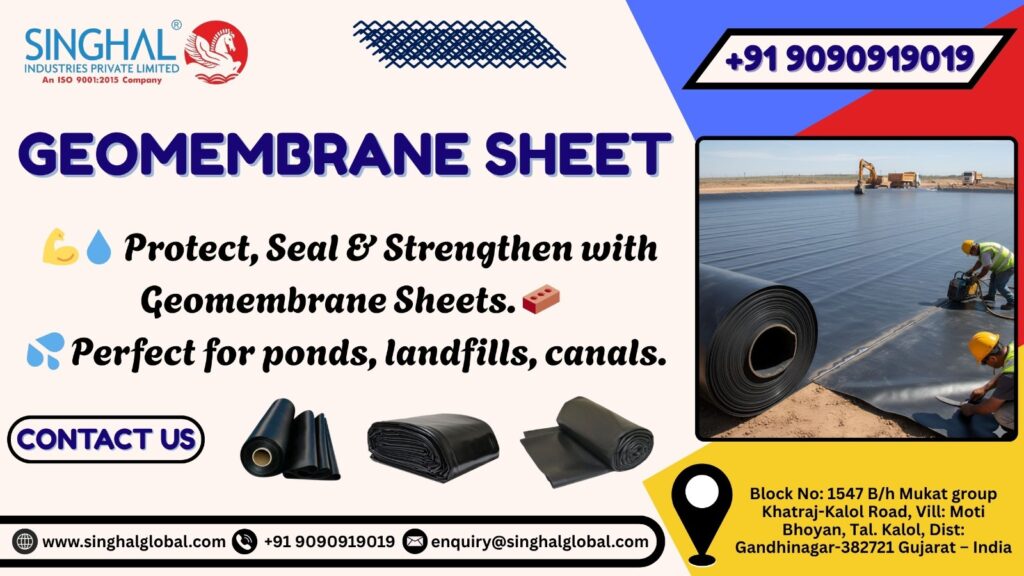
Geomembranes are flexible, tough sheets – typically composed of high-density polyethylene (HDPE)–designed to serve as barriers. They stop gas or liquid leakage, making them a necessity in mining, agriculture as well as waste management. Although industrial applications have been in use for a long time, modern agriculture is witnessing geomembrane companies develop products that are specifically tailored to agri requirements.
Consider them the unnoticed heroes who protect reservoirs from seepage and lining the ponds of fish and securing silage pits or even assisting with greenhouse flooring, when it comes to controlling moisture.
Why Geomembranes Matter in Modern Agriculture
Traditional farming methods depended on the mercy of nature– plenty of rainfall, regular seasons and no extreme weather. Those days? They are definitely fading. A lack of water soil degradation, water scarcity, and unpredictability of climates means that farmers have to play a vital role in regulating resource use.
Geomembranes are where they come in:
- Water Conservation By lining canals or the ponds using HDPE sheets and lining them with HDPE sheets, leakage losses are reduced dramatically.
- Soil Protection: Stops the leachate of toxic chemicals or other contaminants from leaking into farms.
- Flexible applications From horticulture beds all the way or silage storage geomembranes are able to adapt to a variety of applications.
- Cost Efficiency: While there is an investment made upfront, less soil erosion and water loss can translate into significant savings in the long run.
As an example, we can consider another example: in Punjab, dairy farmers often protect silage pits with the help of geomembrane. In their absence, water that seeps into the stored fodder may lead to spoiling, mildew as well as ultimately nutritional loss to cattle. They make sure that there is an excellence in storing fodder during seasons.
HDPE Geomembrane Sheet – The Star Player
In the midst of various kinds, the HDPE geomembrane sheet stands out due to its durability and resistance to environmental factors. Furthermore, HDPE is non-toxic, which makes it a good option for use in applications that involve the production of drinking water as well as food-related agriculture.
A typical farmer may ask: “Why HDPE and not something cheaper?” The answer lies in the life expectancy of HDPE. Sheets last for 20 years or more if they are properly installed and cared for, which means that initial costs diminish into obscurity when compared to the protection they offer.
Installation and Practical Challenges
It’s not fair to present geomembranes as the magic device. In reality, installation is a process that requires skill. Professionally trained installers or farmers are essential in this regard, and it is true that it will cost some extra in the beginning. Certain farmers, motivated by the desire to cut Geomembrane sheets price, attempt the DIY method, but with mixed results.
One farmer told me that “I thought I could lay the sheet myself; two seasons later I found leaks around the liner’s edges.” The lesson learned: sometimes investing in expertise can pay you back security.
Real-life Impact: Case Study
Let’s take for instance Mr. Patel from Gujarat—before he began using geomembranes, he was losing around 40 percent of the water in his pond due to seepage each year. When he invested in an HDPE liner from a well-known Geomembrane manufacturer in india, he retained nearly all of its water and was able to extend the irrigation period by five weeks with no additional expenses for pumping. The harvest increased, profits were up, and he put the extra money into drip irrigation.
This domino effect—better resource management equals better crops and more profit—is the reason why geomembranes are frequently at the core of intelligent farming stories.
Future Potential: Beyond Water
Geomembranes may be currently most well-known for their lining of ponds, but their application is able to expand. Imagine controlled-environment agriculture where greenhouses use geomembrane flooring to reflect heat and control moisture, or urban rooftop farms with geomembrane layers preventing water damage. Who knows? In the coming decade, we could have biodegradable geomembrane sheets or smart liners that are integrated with sensors for leak detection.
Conclusion
As agriculture moves into an increasingly sustainable, smarter future, geomembranes have emerged to be one of the more practical innovations that will drive this transformation. They may not look appealing—just sheets of black polymer. But their impact is deep and quite literal. Since it conserves millions of liters of water annually per season to enhance the health of the soil and promote climate-friendly activities, this HDPE geomembrane sheet has become a part of the present-day agricultural sector.
To farmers, it is not just technology. It’s about empowerment. It is all about addressing environmental concerns and protecting your future farms and their livelihoods. All lined ponds, all water conserved, all crops conserved are significant steps toward an agricultural system which is more efficient, resilient, and sustainable.
As a progressive farmer, an agribusiness expert, or even somebody who has simply taken an interest in sustainable agriculture, remember that smart farming does not necessarily refer to sensor devices and satellites.
Frequently Asked Questions (FAQ)
Q1. Are geomembranes suitable for storage of potable water?
Yes, specifically HDPE geomembrane sheets that are safe for food use and drinking water applications if they are obtained from certified geomembrane producers.
Q2. Do geomembranes need to be maintained?
A little, but essential. Inspecting frequently to see if it is worn, if there is a puncture, or is damaged by the UV will help to extend your equipment. Elimination of dust and debris will also contribute to eliminating premature degradation.
Q3. How expensive is the geomembrane in terms of per square millimeter?
The prices vary depending on the thickness, materials and the manufacturer though a typical price is 60-R200 per square meter of HDPE sheet in India. Customized options like reinforced or textured are costlier.
Q4. Can geomembranes be custom sized and fabricated?
Absolutely. Many geomembrane manufacturers provide tailored sizes, thicknesses, along with ready-made panels to fit requirements of a particular farm.
Q5. Who is the largest manufacturer of geomembrane?
The global leaders are manufacturers from China, India, and the USA, with companies such as Singhal Industries and Agru America having a track record of quality. In India, there are several companies that make high-quality HDPE sheets for agriculture.