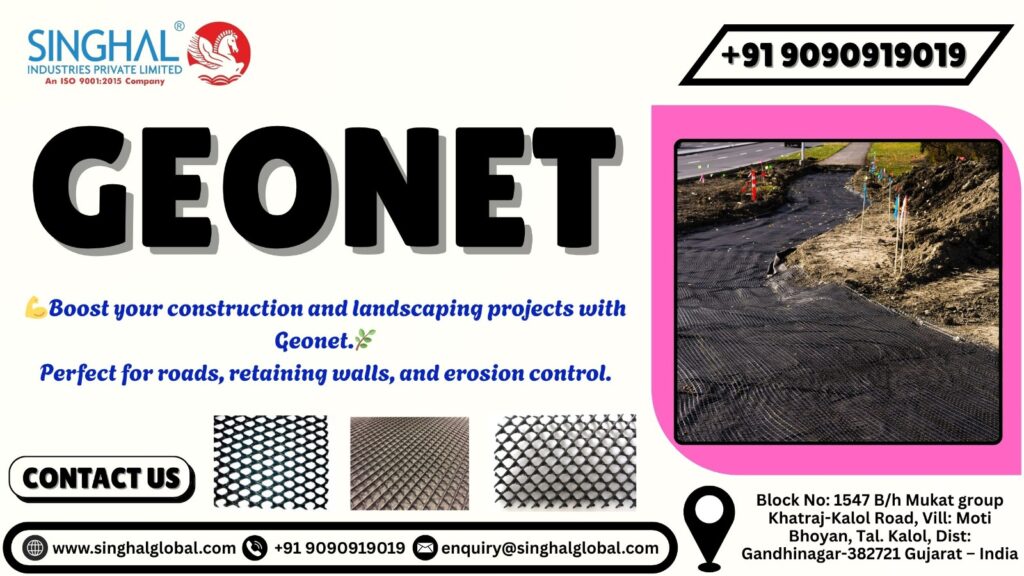
Hey there, fellows! Imagine constructing roads, walls, as well as green roofs, without ruining the earth. This is where Geonet products are a great choice. They’re the unnoticed icons of contemporary construction. These innovative geosynthetic meshes aid in drainage, stop erosion, and help make projects last longer while being extremely friendly for Mother Earth. In this article, we’ll go into how Geonets are changing the rules for sustainable construction. Keep reading, and towards the end, you’ll understand why people are buzzing about them.
What Exactly Are Geonets?
Geonets are the robust, net-like sheets that are made of high-density polyethylene (HDPE) as well as similar polymers. Imagine a diamond-shaped grid that resembles a honeycomb, but is much stronger. It’s made to allow water to move through while keeping soil and other things in the right place. In contrast to regular materials, Geonets come with open channels that can handle extreme pressures without getting blocked.
Traditional methods typically excavate tons of earth, which leads to pollution and waste. However, using Geonets, they can be layered into the drainage of walls or beneath roads, which reduces the use of materials by as much as 50% in certain cases. This isn’t just flimsy talk. Companies such as those from Gujarat are producing these products to accommodate the huge demand for infrastructures in India.
Why Geonets Rock for Sustainability
Sustainability isn’t just a buzzword. It’s about creating products that don’t harm the environment for the next generations. Geonets work well here. They increase soil stability with no chemicals, stop erosion of slopes, and handle stormwater with the same efficiency as pros. For the construction of roads, for instance, they work under the pavement to drain the water away and prevent cracks from developing due to freeze-thaw cycles or the buildup of water.
Green roofs in urban areas are cool and a good way to absorb rainwater. Geonets act as a drainage layer that keeps the roots healthy without causing drowning. A Geonet manufacturer Ahmedabad is aware of this and provides nets that can handle the weight of massive loads while letting excess water out. This results in less flooding in urban areas and more diversity in concrete forests. Furthermore, as Geonets are recyclable, they eliminate the waste loop.
Real-World Applications in Construction
Let’s dive into the details. When it comes to road construction, Geonets act as a drainage blanket beneath the asphalt. Rainwater seeps in but does not pool, thus extending the life of roads by many years. I’ve read about roads in Gujarat where this system reduced maintenance costs by a significant amount. It’s particularly useful when the soil is soft, allowing it to stabilize the soil without bringing in additional fill.
For landfills, Geonets capture leachate, the dreaded liquid that comes from waste, and direct it to treatment facilities without polluting groundwater. Sustainable? Yes, it reduces the risk of the long-term effects of pollution. Retaining walls also like them; when they are placed behind walls, they help to reduce pressure in the water, creating structures that are safer and less bulky (less material is required).
Also, there’s erosion control for banks or slopes. Geonets keep soil in place as vegetation grows, transforming barren hills into green areas. A drainage Geonet supplier India usually tailors these to zones that are prone to monsoon and ensures an abundance of flow, even in the soil overburden.
Benefits That Make You Go Wow
UV-resistant HDPE lasts for more than 50 years in the ground. They also improve performance. Better drainage means fewer potholes and stronger foundations. In terms of environmental impact, they reduce the use of aggregate to millions of tonnes each year across the globe. The lighter design makes it easier to handle, which reduces strain on workers and injuries. Because they’re produced locally by companies like Geonet manufacturer Gujarat, its supply chain stays shorter, cutting emissions.
One cool perk: versatility. Bi-planar is ideal for drainage with high flow and tri-planar for large loads. Combine geotextiles with geotextiles to filter, and you’ll have the power of a hybrid. It’s akin to Lego for engineers. Build smarter, not more difficult.
Spotlight on Indian Manufacturers
India is leading the way in the production of Geonets, particularly within Gujarat and Ahmedabad. Singhal Industries Pvt Ltd stands apart as a Geonet manufacturer Gujarat, exporting high-quality HDPE nets to the USA, UK, and further afield. Their road construction Geonets adhere to strict quality controls and are in line with the highest standards in the world.
The Geonet manufacturer Ahmedabad, similar to Skaps Industries or Aayu International, offers custom sizes to meet local needs. They’re found in hubs such as Moraiya or Chandkheda, which are providing black HDPE nets for highways and landfills. As a Drainage geonet supplier India, Pragati Polyking in Vadodara offers HDPE drainage Geonets at an affordable Geonet price in India in, ranging from 100-150 rupees per square meter.
Installation Tips for Success
Clear the area, put down the base of a geotextile if required, and then unroll Geonet, with channels facing downwards to allow flow. Overlap edges by 30 cm and fix by pins. Then, cover with soil or geomembrane. The majority of pumps can handle 5-50 liters per meter. On steep slopes, be sure to anchor additional. Experts suggest professional surveys to calculate load. If done correctly, it will outlast traditional methods by many decades.
Conclusion
Looking forward to 2026 or beyond, Geonets have been advancing. Bio-based polymers are gaining popularity, which will make them greener. Sensors embedded into nets can monitor drainage in real-time using apps. With the urbanization of India increasing, expect more vertical gardens and flood barriers.
Government policies such as the Indian Green Highways push Geosynthetics hard. Couple this with solar roads or recycled asphalt, and you’ve got a new level of sustainability. There are challenges like awareness; however, education is changing this. Geonets aren’t a fad; they’re the foundation of the future’s buildings.
Frequently Asked Questions (FAQs)
Q1. What are the materials used in the manufacturing of geonet?
A: Polyethylene (HDPE), occasionally polypropylene. These are cast out in grids, welded. Rough on chemicals, UV and loads- ideal with rough sites.
Q2. Will geonet help to avoid soil erosion?
A: Absolutely! It maintains slopes with high speed of water draining, keeping soil particles in place. Roots creep through, root it. Good on the banks of rivers or hills-much better than cement.
Q3. What is the capacity for flow of geonet?
A: Varies by type: biplanar with up to 20-30 l/s/m, tri-planar 5-15 l/s/m when loaded. It was tested in accordance with standards. Gujarat makers specify it for projects.
Q4. Is Geonet green?
A: Recycling is a good idea; it reduces the use of resources and does not require chemicals. A long life means a lot less waste. Eco-friendly roofs, as well as erosion prevention, make it eco-friendly.
Q5. Who is the largest Suppliers of Geonet?
A: The truth is that in India, Singhal Industries Pvt Ltd leads in exports from Gujarat. They provide worldwide and across the country with the highest quality and quantities. Look up drainage Geonet’s supplier in India for more information.
To conclude, whether you’re building in Lucknow or elsewhere, get a Geonet from a manufacturer in Gujarat and be environmentally sustainable. It’s not just smart; it’s the future.