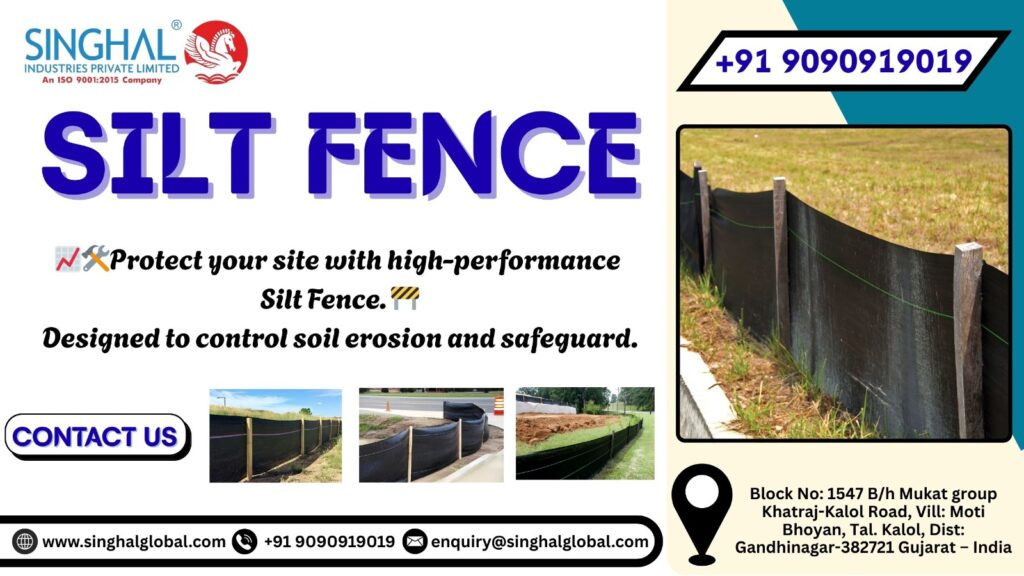
The progression of silt fence technology in the contemporary building industry has been an amazing voyage which has, to a large extent, resulted in better methods for controlling erosion and managing sediment in construction sites. In the span of time, technologies of silt fences have been changed from just obstacles that prevent sediment spread to very advanced and environmentally friendly systems that can easily comply with regulations. So, this is the story of the change, highlighting the innovations, the influence of silt fence makers, factors affecting the cost and the impact of real-world constructions in the surrounding environment.
What Are Silt Fences?
Fundamentally, a silt fence is one amongst several temporary measures that limit the sediment caused by earthworks and construction activities. Silt fences are made of permeable geotextile fabric material that acts as a filter. Thus, the fences allow the water to pass after catching soil particles. In this way, rivers, lakes, and wetlands, for example, are spared from pollution that may be caused by construction works. The idea behind this technology is very simple but the materials and the technology of these fences have always been improved to satisfy the requirements of future projects and the environment.
Early Designs and Limitations
At the beginning of the silt fence era, these fences were very simple—the filter fabric was secured by wooden stakes on both sides. They were good for minor erosion problems, but in some cases of heavy rainfall and steep areas, they could be broken. Also, installer skills differed, and if a silt fence had been wrongly positioned, it could become worthless by letting sediment out or even by causing the fence to fall.
How a fence was assembled had a big effect on its working. By the end of the 1990s, research had proven that “static slicing” is the best way to put fabric into the soil. This method involves inserting the fence into a narrow cut in the ground which thereby stabilizes the fence and greatly lessens sediment escape. This basic study was the turning point that opened the way for the current efficient and everlasting silt fence installations.
Advances in Materials and Design
Changes in materials for the construction of silt fences have contributed most to the technology advancements of silt fences. At present, polypropylenes are usually used to manufacture silt fences and they are normally made of yarn with excellent resistance to UV rays which is then woven into a strong and permeable fabric. Some producers coat it with a wire mesh on one side so as to make it resistant to the pressure of both the wind and the water. A fabric along with wire backing which is made by the majority of Silt fence manufacturers not only in India but also in the world, is the most optimal combination of sediment filtration as far as structural integrity is concerned.
The fences come in different sizes and thus are of widths from 24 to 48 inches and lengths which can be customized to the project’s requirements. These grades and sizes enable the engineers to be more flexible in their work to adjust the barriers to given field requirements and regulations.
The Silt fence price is determined by five factors: the quality of the fabric, the grammage (weight), the type of the backing, and the size of the fence. For example, a fabric-only roll may cost around $100 and may even go higher if it is a larger or more rugged roll, whereas a charged wire-backed version may cost you $40 per 100 feet for the pre-staked option. This price variation is a reflection of the fence’s intended lifespan, its durability, and the site where it will be used.
Modern Innovations: Smart and Sustainable
At present, silt fences can also do more than just hold back sediment. The coming days seem to be about “smart silt fences” that will be outfitted with sensors and IoT (the Internet of Things) gadgets which will enable them to keep track of sediment accumulation, their structural stability, and the water inflow. Visualize a site manager getting a message on his mobile phone the moment the amount of sediment reaches a certain level so that he can sidestep the problem by doing maintenance before the situation gets out of hand.
Another innovation that has gained momentum is vegetative integration into silt fence structures. These “green” fences merge geotextiles with living plants to not only bind the soil but also increase water intake naturally. Among the eco-friendly benefits are: the natural habitats’ restoration, lesser running costs, and nice-looking landscapes that make the usually hard construction scenes more appealing.
Real-Life Construction Site Insights
Imagine a massive road project in India having to manage soil runoff that is heavy due to the monsoon season. Simple silt fences were used in the first few attempts but they often gave way under the persistent heavy rains and sediment was able to wash into the waterways. The site changed over to modern, wire-backed, UV-protected silt fences that were installed using the static slicing method and sediment loss dropped dramatically.
Besides the environmental compliance, the site managers also felt a real relief from the constant repair and cleanup work. The new method made their hard work less stressful, and they were able to “sleep better at night,” knowing that the fences were working. Nevertheless, a few workers were initially disgruntled with the “extra care” that was required in the installation of the fence as compared to the previous method, which shows that technological progress sometimes brings new problems and requires getting used to.
Who Is the Largest Supplier of Silt Fence?
There are several companies in India, which are leading the silt fence supply sector, while quite a few manufacturers are gaining a reputation for their quality and innovation. Such companies as Shakti Polyweave Pvt. Ltd. and Singhal Industries can be referred to as the best Silt fence manufacturers, who supply a variety of erosion control products specifically designed for the construction industry. With their commitment to quality and service, they have earned trust in the local as well as the global markets.
However, the truth about the absolute leader is still a matter of debate – some people believe that small local suppliers offer better service because they are more customer-oriented. The contradiction between these two viewpoints illustrates the business aspect of “largest” when it could be a question of volume, reputation, or reliability depending on whom you ask
Conclusion
The development of silt fence technology is the story of combining the old with the new. What was initially just a simple fabric barrier is now a sophisticated, eco-friendly construction tool indispensable for construction sustainability. The story reflects a broader issue in the construction sector: the struggle of balancing between simplicity and sophistication, cost and quality, environmental stewardship and practical site management.
In case you are engaged in construction or erosion control, being up to date with these changing technologies from the Silt fence manufacturer – knowing pricing, installation best practices, and new innovations – can be a real game-changer. The truth is that every grain of soil that is saved counts not only for regulators but also for communities and the planet.
.
Frequently Asked Questions (FAQ)
Q1. What materials are silt fences made from?
Silt fences mainly use either woven or non-woven geotextile fabrics, and they are generally made of polypropylene, treated for UV protection. There are some models that provide wire mesh backing for structural support and at the same time, maintaining permeability.
Q2. How long does a silt fence last?
The duration of a silt fence varies greatly depending on the quality of materials used and the conditions of the site. A temporary silt fence is normally designed to last the duration of a construction project – from a few months to a year. Fences installed with UV protection and strong mounting will be more durable, but after a heavy storm, repairs or replacement may be necessary.
Q3. Do silt fences come in different sizes or grades?
Silt fences come in several standard widths (normally 24 to 48 inches) and may be made to any length. Fabric weight is dependent on the required strength and filtration capacity. The wire-backed version is an option that has higher durability advantages for a difficult site.
Q4. What’s the proper depth to install a silt fence?
The fence fabric should be dug in around 6 to 12 inches from the soil to fix the bottom part and avoid water flowing undercutting. The right compaction after the embedding is necessary to ensure stability and the maximum effectiveness of the fence.
Q5. Who is the largest supplier of silt fence?
There are numerous companies that can be referred to as the major players in the industry, from which Shakti Polyweave Pvt. Ltd. and Singhal Industries can be mentioned as two of the best-known large manufacturers in India. However, the “largest” may vary according to the quantity, place, and area of expertise.