Cities are expanding rapidly, and rainfall patterns are changing. Old-fashioned drainage systems aren’t enough. The presence of standing water, a dripping garden, and the structural damage caused by excessive water are common occurrences for both commercial and residential projects. This is where drainage cells come in. They’re not merely an additional “drainage product”; they are defining how water is managed in landscapes, green roofs, podiums, and civil engineering works. This article will take a look at the way that drainage cells function, the reasons why they’re important, how the Drain cell manufacturers are advancing their performance, and what you need to know about the Drainage Cell Price and their performance.
What Exactly Are Drainage Cells?
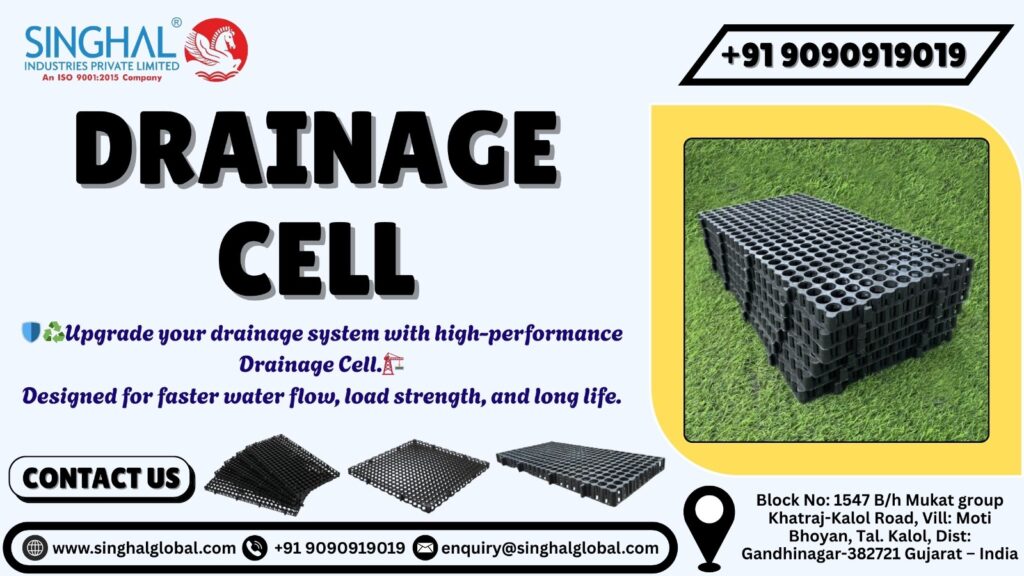
Drainage cells, also known as drainage cell mats, dimple board drainage plates, or dimple boards, are lightweight plastic sheets that are three-dimensional, typically made of HDPE (high-density polyethylene) or polypropylene. They feature a honeycomb-like dimpled structure that creates a void under pavers, soil, or green-roof layers. This void allows water to move swiftly through the system instead of settling within the soil or against the waterproofing membrane.
When rain falls or when irrigation flows off, water gets absorbed and hits the drainage cell layer, then flows through the channels, eventually reaching specified outlets or soakaway zones. Since the cells are robust but light, they can help support plants, soil, and light-to-medium-sized traffic without bursting.
How Can Drainage Cells Help Enhance the Flow of Water?
Traditional drainage made of gravel is heavy, difficult to install, and can be blocked by silt over time. Drainage cells can solve this issue by combining a high void percentage and engineered flow channels. Dimples or ribs form continuous channels for water, allowing it to drain faster and more efficiently.
In actual usage, this is:
- The water doesn’t pool at the surface or underneath the membrane.
- Runoff is directed towards collection points, soak-aways, or rainwater harvesting systems.
- The soil remains aerated, which helps plants and lessens compaction.
This is the reason that many Drainage cell manufacturers are now designing products that have specific flow capacities (often measured in meters per liter or liters per second) as well as compressive strengths, so that engineers can choose the appropriate cell for the climate and load of the project.
Do Drainage Devices Help to Prevent Waterlogging?
Yes. Waterlogging prevention is among the most important reasons for people to use drainage devices. In garden areas, podium decks, and green roofing, the possibility of waterlogging could:
- Damage waterproofing membranes.
- Cause root rot in plants.
- Increase hydrostatic pressure on basements and retaining walls.
Through the provision of a controlled drainage layer, drainage cells can:
- Reduce the water table to just beneath the level of water.
- Reduce the length of time that water stays on the membrane.
- Allow the soil to drain more quickly in the aftermath of heavy downpours.
Many projects that use drainage cells have reported fewer puddles, healthier plants, and less work on the waterproofing layer.
Are Drainage Systems Strong Enough to Support Landscaping Loads?
The most frequent question is whether the plastic sheets can manage soil, plants, and pedestrians. The answer is yes, provided you select the right one. Modern drainage systems are examined for compressive strength and rated in tonnes for each square millimeter (t/m²). For instance:
- The light-duty cells (around 13-20 millimeters thick) can handle between 50 and 100 tonnes per square meter and are ideal for lawns, gardens, and pedestrian zones with light traffic.
- Heavy-duty cells (25-50 millimeters thick) can be rated as high as 100-200 t/m² and are used for parking decks or podium decks. They can also be used for light traffic.
When you speak to the Drain cell manufacturers, be sure to ask questions like:
- Material and thickness (HDPE versus polypropylene).
- The strength of your compression for your particular application.
- Whether the product you choose to purchase is suitable for the expected load (people, vehicles, or even equipment).
Who Is the Biggest Supplier of Drain Cells?
There isn’t a single widely agreed-upon “largest exporter of drain cells” globally, as diverse companies have different positions in areas and with different types of products. In the Indian context, several manufacturers have emerged as the leading suppliers of drainage cells in markets like the Middle East, Africa, and Southeast Asia. A few of the most famous Drain cell manufacturers and exporters out of India include:
- Singhal Industries (Singhal Global) offers HDPE and polypropylene drain systems for podiums, terraces, and retaining walls. The company also exports to a variety of countries.
- Vikas Industries manufactures 20 mm, 25 mm, 40 mm, and 50 mm drainage cells. It is also marketed as a major exporter out of Mumbai.
- Ocean Global / Ocean Geosynthetics is regarded as one of the leading drainage cell producers in India and focuses on geosynthetics and export-oriented production.
If you’re looking for suppliers for an upcoming project, it’s recommended to directly inquire with the supplier whether they are certified exporters and what certifications (if any) they have, instead of assuming that only one company is “the most popular” across the globe.
Price of a Drainage Cell: What Do You Think?
The Drainage Cell Price is contingent on many factors; therefore, the mere mention of a number can be incorrect. However, a few broad ranges are surfacing in the market:
- Cost per square meter (international markets) is around 0.90-5.00 USD/m², depending on thickness, material, and the manufacturer. Cells that are thicker and more robust (e.g., 50 mm) have a higher price at the upper end.
- In India, the prices on platforms such as IndiaMART have drainage mats that range from Rs 90 to Rs 215 per square meter, depending on the size and capacity of load.
When comparing Drainage Cell Price, take into account:
- Strength and thickness (higher means more expensive, but more suitable for loads with a lot of force).
- Materials (HDPE versus recycled polypropylene).
- Project scale – bulk orders often get discounts.
- Additional costs such as geotextiles, transport, and labor.
The Right Choice for a Manufacturer of Drainage Cells
With the number of drain cell manufacturers and cell producers on the market, how can you choose the best one? Here are some useful suggestions:
- Find out the technical specifications: Request compression strength, thickness, material (HDPE or polypropylene), and capacity for flow. Don’t rely on “looks” or the price.
- Request a load rating: For podiums, parking spaces, or large landscaping, choose a cell that is rated for the expected load (e.g., 100+ tonnes per square meter).
- Examine the certifications and experience in export: When undertaking a big project, look for manufacturers that have previously supplied similar applications and have test reports available.
- Check the total cost of your project: A slightly more expensive drainage cell cost per square meter will save you money on labor, transportation, and long-term maintenance.
Conclusion
In conclusion, drainage systems have revolutionized the way we deal with water in the modern landscape and infrastructure. Their capacity to stop flooding, promote sustainable drainage practices, and withstand different loads makes them an indispensable tool for urban planners, homeowners, and architects. As technology improves and awareness increases, drainage cells will play a greater role in shaping the direction of future water use.
Frequently Asked Questions (FAQs)
Q1. Are drainage tanks strong enough to support landscaping loads?
Modern drainage systems are built to take on common landscaping demands, such as soil, plants, weeds, and even the occasional foot traffic. Some products are designed to handle 50 to 200 tonnes per square meter, depending on their thickness and the type of material. Make sure to match your cell’s strength of compression with the requirements of your project.
Q2. How do drainage cells increase the flow of water?
Drainage cells form an open space with designed channels that permit water to flow swiftly across either the exterior of the membrane or the base layer. This helps reduce ponding, speeds up the drainage process, and keeps the soil in better condition.
Q3. Do drainage systems prevent waterlogging?
Yes. By providing an uncontrolled drainage layer, drainage cells reduce the water table below the surface and decrease the amount of time that water remains in contact with waterproof membranes or plant roots. This greatly reduces the chance of waterlogging in podiums, gardens, and green roofs.
Q4. Are drainage systems suitable for roof gardens?
Yes, drainage systems are frequently used in roof and terrace gardens due to the fact that they are light, easy to install, and efficient in removing water from the waterproofing membrane. They can help keep membranes safe, lower hydrostatic pressure, and promote healthy plant growth.
Q5. Who is the largest manufacturer of drain cells?
There isn’t a widely recognized “largest exporter.” However, in India, many companies are significant exporters, such as Singhal Industries Pvt Ltd, Vikas Industries, and Ocean Global. These companies supply drainage cells to markets around the world and are frequently cited as the top exporters in India-focused trade websites and blogs.