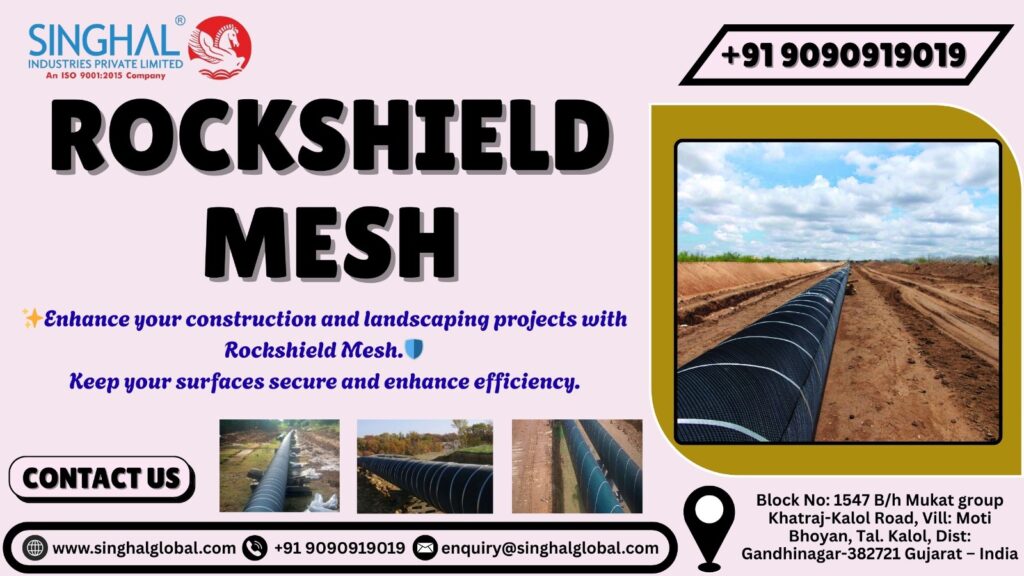
Rockshield mesh functions as a strong shield encased around pipelines, preventing rough and sharp rocks from tearing up the protective coatings. It’s a game changer for gas, oil, and water lines that are buried in rocky soil and will ensure that they’re not subjected to nasty surprises. Most of it is high-density polyethylene; this material can be bent but isn’t broken even when pressure is high.
Why Pipelines Need Rockshield Protection
Imagine digging a trench for gas pipelines through the hilly terrain, with rocks everywhere, waiting to cut the pipe’s coating when backfilling. This is where the Rock shield for pipelines comes in. It disperses the force of sharp stones, transforming pointy dangers into boring bumps. There are no more scrapes or dents that cause rust or leaks down the pipe.
The mesh isn’t just padding; it’s intelligent engineering. The diamond-pattern holes allow water to flow through, which means that there aren’t any accumulations of puddles and the resulting rot of the pipe. It’s flexible even in freezing hot or freezing cold, which is ideal for India’s unpredictable weather changes. It’s also designed by Rock Shield Manufacturers to be lightweight, allowing crews to transport it without cranes. One roll covers many meters in a short time.
Imagine a Real-Life Scenario
A water pipe in Rajasthan’s deserts with a rocky surface. Without rockshield, backfills crushed the coating and caused leakage. When you add the mesh, there will be no issues for a long time. It absorbs shocks caused by shifting ground, such as earthquakes or soil that is settling. This is integrity management at its finest—proactive and not reactive.
Engineers are enthralled by the way it works together with protection mechanisms for cathodic. Contrary to solid wraps, the open weave does not interfere with electrical currents fighting corrosion. Tensile strength scores high and resists tears caused by the dragging of gravel. It is also UV stable in the event that it is exposed during installations. Costs? Much less than digging up a failed line later.
How Rockshield Mesh Works Its Magic
It is wrapped around the pipe in the net and secured by ties or tape. If rocks fall in during backfill, the mesh absorbs the impact. Think of it as a buffer on your pipeline. The abrasion caused by granular soil? Minimized. The effects of geological changes over time? Blocks from reaching the coating.
Materials matter. Polyethylene blends of low and high density offer that ideal balance of stiffness and bend. Its thickness is around 4-6mm as standard, and custom work is more robust for mega-pipes. The openings are just right—big enough to allow drainage, but small enough to keep rocks from getting in. Installation is simple: two people unroll and wrap it, then take a couple of minutes per section.
For offshore events, it battles anchors and trawler nets as well. It is buried deep and can handle the dynamic load of traffic overhead. A study found that pipelines protected with rockshields had 70% less wear on the coating over the course of five years compared to ones that were not shielded. That’s based on facts and not a rumor. The Rock shield for pipeline is a source of income.
Flexibility shines brightly in gaps and sloping trenches. No cracking like rigid shields. Chemically inert, it doesn’t react with brines or oils. For long-haul lines that cross mountains, the mesh is a must. This mesh will save millions of hours of downtime.
Key Benefits Across Industries
Pipelines for gas and oil get the most attention, but sewers, water mains, and even chemical lines rely on it. On shores with rocky shores, it shields against the waves that toss rocks. Mining slurry pipes? It can handle abrasive sludge with ease without hesitation. Digs in urban areas near roads protect you from scraper nicks.
Lightweight means no extra shipping costs. Rolls of up to 100m in length and widths that allow for pipes of 12 to 48 inches easily. Corrosion resistance beats metal guards hands down. Testing for impact simulates backfill drops. Mesh is always the winner. The elongation of the mesh prevents snaps when stressed. Compare with sand padding: slow to put in place, moves in time. Concrete mats? They are heavy and expensive for land work. Rockshield? Quick, reliable, green—recyclable too. One Gujarat gas line project cut install time by 40% using it. Farmers also use similar irrigation pipes in fields with stony soil. It is a matter of flexibility.
The strength of the tear and wear resistance means it will last the pipe’s lifetime often. It reduces overall costs of ownership by avoiding repairs. In arid soils, such as laterite or black cotton, it impedes point loads from cracking coatings. Pipeline integrity? Securely locked in.
Installation Best Practices
First, clean the pipe and ensure there are no scratches. Take measurements, cut the mesh to the size that allows for 10 percent overlap. Half-shell or wrap it in a spiral to secure every inch. Backfill in layers; no dumping rocks directly. Start by gently tapping.
Tools required: only scissors, zip ties, and perhaps the use of a roller to make it a more ideal fit. If you have a tight tension rock snuck into the train; too tight, creases appear. Test wraps shaken and nothing changes? It’s a good sign. Wet days? Fine, as it drains quickly.
Common mistakes: under sizing for huge pipes that lead to gaps. Avoiding overlaps, as rocks get through. Rockshield Manufacturers in India often offer guides in rolls. Just follow the guidelines and you’ll be in the right place. When you install the cover, make sure to check it visually—the final cover.
For combos, layer under geotextile for dual protection. Onshore, weights for ballast keep it in place. Long runs? Butt seams have patches. Pros finish 1km/day easily. Start with the right approach, and put aside worries for a long time.
Rockshield in India’s Pipeline Boom
Gurugram is one of the major pipelines in India. Mathura oil pipeline, Ajmer Gas Grid. Rocky Deccan traps demand tough shields. Rockshield Manufacturers in India, like Singhal Global and local Gujarat outfits, boost the supply. They are familiar with monsoon mud and seismic zones firsthand.
Why do we grow our own? More speedy delivery and no import waiting. Prices in rupees remain constant in spite of global swings. Custom-made weaves meet Indian pipe specifications. Factories near Surat and Ahmedabad churn out ISO-grade mesh. One Mumbai refit made use of Indian rockshield, which saved 25% over imports.
Government mandates for ONGC and IOCL projects favor certified locals. Sustainable angle: less transport emissions. Recycling PE versions are becoming available, which is a green benefit. Rock Shield Suppliers here test rigorously—impact and tensile tests, as well as abrasion, all of which pass API standards. Your pipeline is safe by using desi gritty.
Exports also grow, and Middle East deserts purchase Indian stocks. The quality of the stock is similar to international brands like Seal for Life. Shop through Indiamart to get bulk discounts. However, make sure to verify the certifications. The times of boom for infrastructure mean the demand for rockshields skyrockets.
Quality Checks and Standards
Manufacturers run drop tests—simulate 1m rock falls. No coating breach? Pass. Tensile can reach 200kN/m. UV aging of chambers. Salt spray for corrosion simulations. Field tests in real trenches.
Standards: API 15J, ISO 13427. Density 0.94g/cm3 min. Elongation 400%+. Rockshield Manufacturers in India stamp batches that are traceable. Third-party labs such as SGS confirm. Get tested, rest easy.
Conclusion
Cobbles and sandy soils? Mesh can be flexed, allowing for protection. Sub-zero installs? Keeps its flexibility up until -40°C. Heavy traffic? Extra layers. Repairs? Take out the areas of damage and patch it seamlessly. Challenges met head-on.
Cost creeps when weaving the thick weaves, but ROI shouts value. Vs. failures: priceless. Regulations are evolving, with BIS pushing for more stringent specifications. The mesh is future-proofed and compliant. Integrity management changes with time.
Rockshield mesh makes pipelines solid literally. From rock-strewn digs to long-term reliability, it’s the unnoticed hero of the infrastructure. Choose the best Rockshield Manufacturers in India, make sure you install it correctly, and watch your venture flourish for generations.
Frequently Asked Questions (FAQs)
Q1. Can the rockshield mesh withstand the damage caused by coatings?
Absolutely, it was designed for it. It absorbs rocks’ impacts and reduces abrasion by more than 80%. Correct installation ensures that coatings remain clean for a long time.
Q2. Can the rockshield mesh withstand extreme conditions on the soil?
Yes, it thrives in abrasive, hard, and rocky soils. It is flexible in sands and clays too. Drains water, blocks shifts, as tough as nails.
Q3. Can it be used in conjunction with geotextile?
Completely—layer geotextile on the inside or outside to filter water and protect. Common in wet zones. Strengthens the overall system.
Q4. Which quality test is conducted?
Tensile strength, impact drops, UV resistance, and abrasion rubs. Meets API/ISO. Tested in batches to ensure consistency each time.
Q5. Who is the largest supplier of Rockshield Mesh?
Worldwide, SealforLife and Pipesak lead. For India, Singhal industries Pvt Ltd tops with its huge output of ONGC projects. They are reliable giants.