U Panel Bulk Bags are the silent heroes of the modern world that, without much fanfare, carry the heaviness (most literally) of the construction, agriculture, and chemical industries, while hardly anyone outside these domains ever spots them. However, these bags are far from being ordinary. Made to be very reliable, strong, and, in an incredible way, very flexible, they are the main power units behind the largest part of the world’s bulk material transportation. So what is it that heavy-duty operations—from a country farm to a huge cement plant—keep coming back to the U panel jumbo bag for? Let’s explore the intricacies, answer your most frequently asked questions, and even reveal some stories from the field that show not only the reliability but also the funny side of the usage of these necessary containers.
What Is a U Panel Bulk Bag?
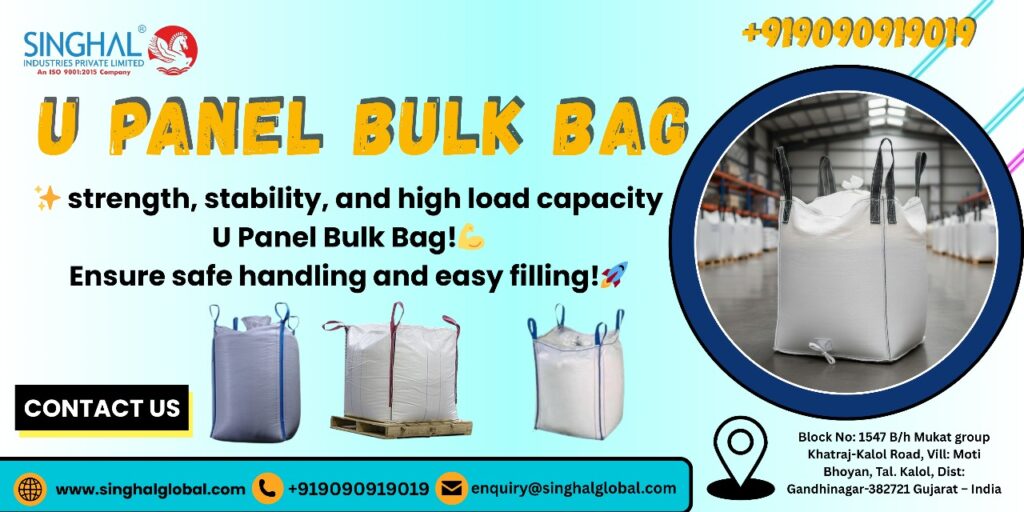
The U panel bag in a jiffy would be recognized as a totally different thing from your average shopping tote. Normally (mostly) woven polypropylene is used for production, and the design of the product comprises one fabric panel which is folded to make the bottom and two side panels of the bag—’U’ shaped—both the remaining sides are stitched together, thus closing the shape. The one-of-a-kind framework gives it a cubic, close to a boxy look when it’s packed, which might be a bit laughable in a warehouse, but it actually serves a very important function: it helps the bag stay vertical and space-saving, thus weakening the pressure of the contents and making it possible to store the bags in stacks.
Consider a U panel bulk bag to be the hardworking employee who doesn’t take a single day off. The U panel bag was actually the silent hero when a monsoon-rainy night in India came and put the whole grain storage plan in jeopardy as it stood against the storm, kept the grains safe from water, and contamination (although not completely waterproof—more on that later!).
What’s the Reason Behind the Great Reliability of U Panel Jumbo Bags?
Being reliable in the bulk packing domain is far from being only able to handle a heavy weight. It is a bigger challenge to keep this weight safe, secure, and in a fresh condition to be used in the next operations. India—and worldwide—U panel jumbo bag manufacturers have packed them full with features that have them selected time and time again as the top performers by industrial heavy users of densely loaded, tough, and trouble-free cargo solutions:
- These bags, as a rule, have a minimum safety factor five-time ratio 1:5 certified, which implies they have been designed to be able to carry at least five times the given working-load capacity without breaking. For some heavy variants, the threshold is even higher, upward of 10 times, thus double safety is assured.
- Space Efficiency: Because of the cube design, it is possible to stack these bags very close to one another, thereby utilizing both warehouse and cargo space to the greatest extent possible—something which is vitally important for cost-cutting enterprises that are very selective about their spending, for example, low-density goods shipping.
- Personalization: How about a bottom spout for convenient discharging? Insertion for additional moisture-proofing? Extra loops for hooks? U panel sacks can be completed with your precise specifications, while other FIBC cannot.
- Open to multiple uses: After the harvest, grains can be stored in these bags as well as be used for the transportation of plastic pellets, sand, cement, or even chemical powders that are hazardous. In addition, the bags have very few problems in handling such a variety of jobs.
Here is a little secret—efficiency in a warehouse is mostly as much dependent upon the small things as the big ones. A chemical factory manager in the Indian state of Gujarat once told that he put his faith in the local manufacturer of U panel bulky bags because the bags always accompanied the provision of document pouches, thus making the checking of stocks easier and lessening the mix-up happening due to loading-bay chaos.
U Panel Jumbo Bag Manufacturing: How Are They Made?
This definitely is one of the most interesting and at the same time most precise processes. Manufacturing goods made of U panel FIBC material are often a mixture of quality control, perfect stitching, and, in some cases, a touch of local flavor (e.g., India with its world-famous industrial cities like Surat and Ahmedabad where these products are manufactured).
It all starts with the production of 100% polypropylene yarns that are then woven into strong but at the same time light fabrics. These are rolled out in big sheets and after measuring, cutting is carried out—sometimes hot-cutting is also done so that the edges do not fray. The U panel outline is the result of one large piece being folded, thereby a strong bottom and sides are constructed, and then by sewing in the side panels which are not only strong but also compatible with the fabric, the job is done. At this point, the installation of such things as lift loops (for forklift or crane), top skirts, fill, and discharge spouts, or additionally a special inner liner for moisture-proofing, is done.
Conclusion
One may assume, due to the abundance of technical terms and industry laurels, that the U Panel Bulk Bags are an insignificant matter. On the contrary, very human reasons are behind their existence. They give the possibility of survival to the farmers by securing a safe way of bringing the yield to the market; they are the means that carry the base material for almost everything made of raw materials; and in addition, they do all this while gently accommodating to the changes in needs, places, and even accidents. Whether the purchase is made from a leading exporter or a minor manufacturer of U panel jumbo bag in India, the same desires and doubts are there: Will this bag hold up? Will my goods reach safely? Can I trust the supplier? Most of the time, U panel bags come through—and that’s the reason why, after all those years, they still remain a heavy industry’s staple all over the world.
Frequently Asked Questions (FAQ)
Q1. Are U-Panel Bulk Bags Safe for Industrial Use?
Yes, to a large extent—with some qualifications. Most good manufacturers of U-panel bulk bags put safety at the forefront, thus every bag they produce can be considered as meeting or exceeding the industrial safety standards and carry certifications such as ISO9001, SGS, or even UN standards for the transport of dangerous goods. They are usually accompanied by a Safety Factor (SF) of 5:1 or 6:1, meaning their tested strength under critical loads.
Q2. Are U Panel Bulk Bags Suitable for Abrasive Materials Such as Sand or Gravel?
Yes, this is a major point in their favor! Sand, gravel, minerals in a crushed form, and other similar abrasive materials are the most common contents of U panel bags. Fabric made of woven polypropylene is a material which by design has high resistance to abrasion and tearing, and thus the products made of it are naturally the right choice for harsh commodities. In fact, numerous entities from the construction and mining sectors have embraced these sacks as their go-to for tough, gritty, and dusty work.
Q3. What Is the Average Lifespan of U Panel Bulk Bags?
How long is a piece of string? Well, with U panel bags, it really varies depending on factors such as how they are used, where they are stored, whether they are exposed to sunlight, and what is inside them. When taken care of properly (i.e., kept away from UV rays and not overloaded beyond their SWL), they might last for a couple of years and be used multiple times. However, the industrial users treat these bags mainly as single-use or, at most, limited reuse ones, especially in the case of food, chemicals, or other goods which may cause contamination.
Q4. Are U Panel Bulk Bags Fully Waterproof Or Just Moisture-Resistant?
Bit of a tricky question here! Normal U-panel FIBC bags are not water-resistant because woven polypropylene is a material that still allows a certain amount of air and moisture to pass through it. Nevertheless, producers can do so by adding a special layer or putting a plastic liner inside, thereby making the bags absolutely moisture-resistant and therefore usable in damp or wet places.
Q5. Who is the Largest Exporter of U Panel Jumbo Bags?
In this case, the US is the leading exporter of U-panel-style jumbo bags worldwide. In this respect, it is followed by India and China. The Indian exporters and, in particular, the Gujarat and Maharashtra areas, have been the main contributors to this achievement with several companies participating in this market and servicing their clients globally.