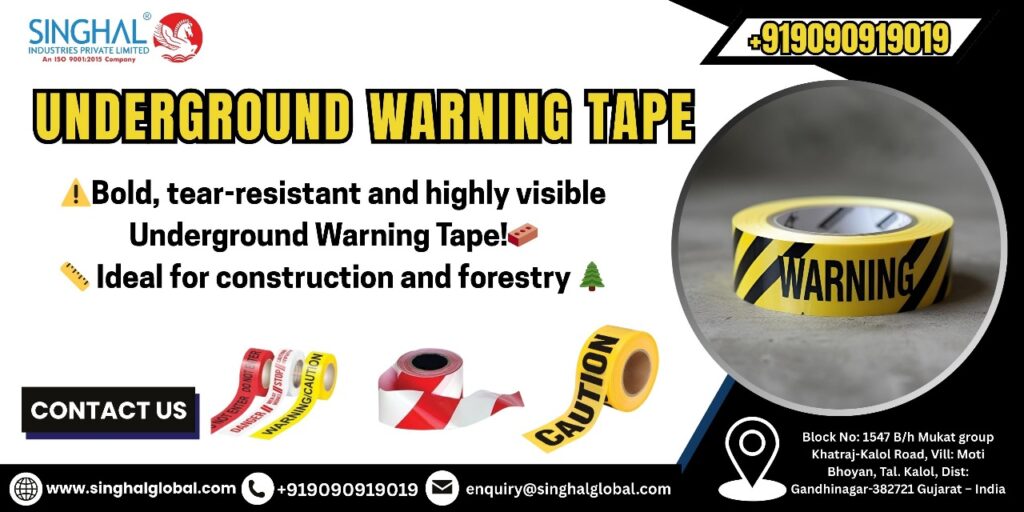
If you see the warning tape flying in the breeze or hidden beneath the ground, it may appear to be something that is too mundane to be of any significance. But, in fact, the warning tape is one of the most effective silent security measures. It’s used everywhere—construction sites, road projects, utility works, and even in underground pipeline networks. Without it, the workers and communities would be prone to numerous accidents, expensive delays, and unneeded risks.
Warning tapes are not simply colored plastic. They’re codes, symbols, and a messenger of security. Each color tells an important story, and each strip contains information, and all of it together makes sure that the nefarious dangers that surround us do not suddenly turn into life-threatening threats. If you’re looking for Cable warning tape, cable warning tape underground, and underground caution tape, these strips serve as the first protection in both underground and surface operations.
Why Warning Tape Deserves More Attention
A lot of times, people view warning tape as “just plastic.” But consider this scenario: if excavation teams begin digging in a city and are suddenly struck by the power line of a high voltage, the consequences could be catastrophic. Injuries, fires, outages—everything could happen in just a few minutes. But if you put a luminous warning strip of cable beneath the power line, the threat is eliminated. Workers are immediately aware of the need to take a break before they make a costly or potentially dangerous error.
Engineers often use warning tape to mean “the cheap insurance” of construction. It’s not costly; however, it can save millions in the event of a catastrophe.
The Language of Colors in Warning Tape
The warning labels aren’t random bits of hue. Each shade is associated with a specific significance, and these definitions are frequently standardized to ensure workers are able to understand immediately without the need for an instruction manual.
- Red: Signals electric lines and cables. This is a warning to be cautious.
- Blue: Symbolizes pipelines of water. For irrigation or drinking water, blue is a universal marker.
- Yellow: Marks gasoline lines and reminds people that the ground beneath them is very delicate.
- Green: This usually is a sign of drainage pipelines.
- Orange: Most often used for communications or telecom lines.
This coding system that is vibrant and colorful works similar to a safety manual that is silent. Once you’ve mastered the colors, you will be able to “read the ground” without using the shovel. That’s the reason why Cable warning tape underground has become essential in today’s infrastructure.
Cable Warning Tape: Protecting What You Can’t See
Invisibility doesn’t mean that you are safe. Under our cities and roads is a tangle of cables—electricity, internet, telecom, and other lines that keep our lives going smoothly. If you lay these cables without the proper markings, it is a recipe for trouble.
Cable warning tape serves as an obvious signal to those who work in that area. It is placed over the cable line to ensure that before any cut occurs, the workers are notified through the tape. Imagine a construction worker working in Delhi who is repairing an irrigation pipe and encounters the red cable warning tape underground. Instead of damaging the high voltage line, he is aware of the danger zone. The tape could have saved lives.
Underground Warning Tape: Silent but Vital
As we imagine underground utilities, the majority of people imagine cables and pipes buried within the earth. However, very few think of the quiet strips of underground caution tape over them, acting as an invisible shield.
The tapes are usually made with clear messages such as “CAUTION – GAS LINE BELOW” or “WARNING – ELECTRICAL LINE.” This isn’t just a color anymore; it’s a direct message. When there are areas where multiple utilities are connected, they can be a huge help in preventing cross-damage.
In some cities, contractors are legally required to install underground safety tapes. This illustrates how important they are to maintaining an efficient and safe infrastructure.
Real-Life Lessons: When Tape Saves the Day
There’s a tale from an excavation site in Gujarat in which a team was digging foundations for an upcoming building. When digging, they stumbled upon an orange strip of warning tape for the underground. They looked over the plans, but they discovered that they were only a few inches away from a major gas line. One mistake could have triggered an explosion. But, thanks to the tape, all carried on without incident.
Similarly, in Maharashtra, farmers had to contend with frequent cuts to their cable in irrigation projects. However, after the authorities started using warning tape for cables underground, the frequency of incidents decreased dramatically. Nowadays, farmers are confident that if they spot an area of tape, it is not a nuisance but a vital line of protection for the water source.
Conclusion
A Underground warning tape may seem to be a simple object; nevertheless, its role within the safety and infrastructure domain is immense. At farms, at construction sites, at factories, at city streets, at all places where there are warning signs, the use of warning tape is utilized as a cautioning measure that may help to stop accidents. The different colors of warning tape are not just meant to be attractive, but it also contains a code that speaks a universal language of caution.
The next time you see a strip of cable-related warning tape or underground caution tape, know that it is not just an item of plastic. That is there to protect lives and preserve resources and to ensure that our invisible networks remain safe. It is a tiny scrap of paper, yet a scrap that can have a huge impact.
Frequently Asked Questions (FAQs)
Q1. Is the warning tape waterproof?
Yes. Modern warning tapes are made of polyethylene, which is waterproof and resistant to soil conditions. They will remain intact and clear for many years even if they’re buried underground.
Q2. What color is the warning tape for electric lines?
Red is the primary color used for electrical cables. It instantly alerts of danger and helps prevent accidentally stepping through live wiring.
Q3. What color is the tape being used for water pipelines?
Blue tape is commonly used to mark water pipelines. It assists workers in recognizing water supply lines and also avoids damaging the lines in the first place.
Q4. What is the gas line colour?
The most popular gas lines are yellow. The noticeable bright color will alert the workers that there are gas utilities underneath the ground.
Q5. Who is the largest manufacture of warning tape ?
The competitive prices and the quality longevity of the products have made Indian manufacturers export the best underground warning tape and cable warning tapes to their customers.