Visit any modern pharmacy today and immediately be able to feel the difference: clean air, sparkling flooring, and employees clad all over in clean white gowns. Each and every aspect of the facility is monitored, controlled, and refined to maintain one important thing: hygiene. However, behind this flawless cleanliness is something that most people outside don’t consider: how the raw materials and the finished goods will be transported, stored, and handled. That’s why FIBC Bulk Bags are quietly revolutionizing the business.
Understanding FIBC Bulk Bags
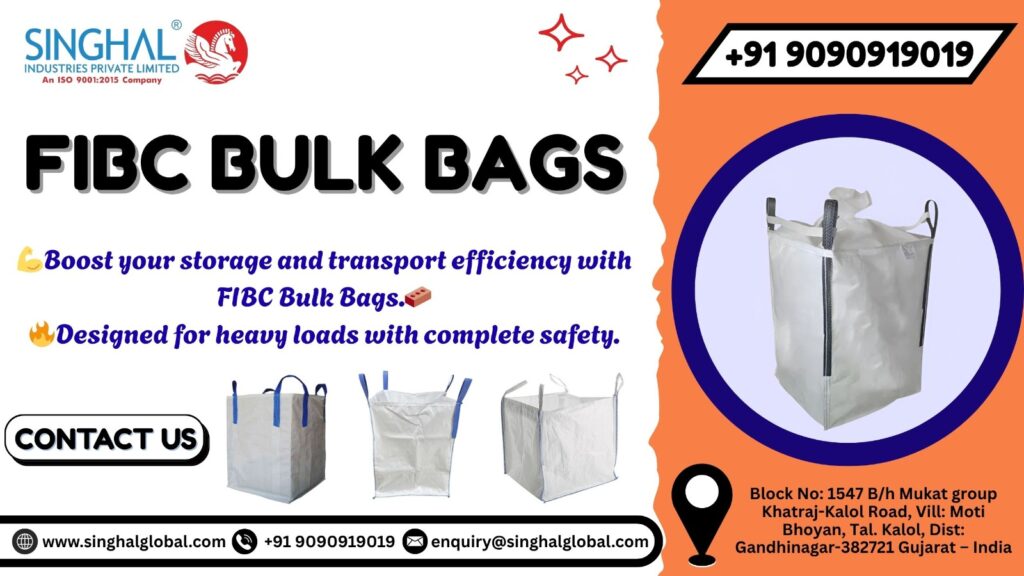
FIBC Bulk Bags, which stands in the form of Flexible Intermediate Bulk Containers, are big polypropylene bags that are specially made to transport and store bulk materials, such as powders, granules, as well as dry products. While they’ve been around for some time in fields such as agriculture and construction, their true potential in the pharmaceutical industry is only being realized.
Pharmaceutical manufacturing requires the raw materials to be clean and free of contamination. Even tiny particles of dust or moisture or static charge can ruin the overall quality of a batch. If you look at the situation this way, choosing the correct packaging can be an issue of life or death, not just for the product but also for the brand’s credibility and, ultimately, for the patient’s security.
The Role of FIBC Bulk Bags in Pharmaceutical Hygiene
It’s easy to overlook how important proper packaging is until there’s a problem. Imagine this scenario: a pharmaceutical powder, carefully blended in a sterilized unit, is transferred into a cheap container. Dust escapes, bacteria discover an appropriate place to call home, and then quality control is able to detect contamination. All of the batch gets discarded. Many hours of effort and thousands of dollars and the company’s name—all gone.
This is precisely why FIBC Bulk Bags Suppliers play an important role in the supply chain for pharma. They’re not selling just packaging materials; they’re also establishing confidence in physical form.
The most effective FIBC bags for use with pharma typically contain:
- Liners inside are made of polyethylene to increase moisture levels as well as dust prevention.
- Antistatic layers to stop electric discharge.
- Dustproof stitching that keeps out external pollutants.
- Production in a cleanroom to ensure cleanliness at all times.
Some companies also use only-for-one-use FIBC bags to reduce the chance of contamination by reuse. Although it may sound like a waste, in the pharmaceutical industry, it is a matter of safety over sustainability in some instances.
Real-Life Insights: From the Warehouse Floor
I was once in a pharmaceutical manufacturing facility situated in Hyderabad (a city now referred to as the capital city of India’s pharmaceutical industry) and observed the loading process live. Workers were moving API (Active Pharmaceutical Ingredient) powder in FIBC bags that looked simple, with soft rectangular containers that were tall and wide. But, as the manager of production said, “These are not your typical bags. Each one is priced higher than a refrigerator of the same size.”
He proudly pointed out the anti-static label, the inside liner seal, as well as the traceability tag with barcodes. Every single detail mattered. These bags were set to be shipped to an overseas European manufacturing facility, and the client who was receiving them wanted absolute purity and traceability. Just one tiny particle of powder in the bag could result in complaints, or even a recall.
Being aware of the degree of care and reliance on “a bag” made me realize how important FIBC technology is in maintaining the global standards of pharmaceuticals.
Types of FIBC Bags Used in the Pharma Industry
Although all FIBC bags fulfill the fundamental function of storing bulk items, not all are appropriate for use in pharmaceuticals. This is how they differ:
- Type A Bags: Polypropylene standard ideal for non-flammable materials.
- Type B Bags: Stop low-voltage static discharge, but do not cause sparks; mildly safe to use with powdery materials.
- Type C Bags: Conductive; require a grounding system during the filling process and discharge. Ideal for materials that ignite.
- Type D Bags: Antistatic; designed to eliminate static without grounding.
Pharmaceutical facilities typically choose the Type C and Type D for handling powders with high risk. It’s all about reducing the chances of static sparks which could ignite dust particles and affect safety procedures.
Hygiene vs. Cost: The Industry’s Ongoing Debate
Here’s the part where things can get a bit tricky. Pharmaceutical grade FIBC bags cost more than the standard bags. One procurement manager from a manufacturing company said, “Sometimes, suppliers try to convince us to opt for less expensive bags, claiming that the cost difference is not significant. However, the risk is not worth the risk.”
It’s a real dilemma finding a balance between cost efficiency and sanitation standards. Many argue that, with the right handling, even ordinary FIBC bulk bags are sufficient to be safe. Others insist that only certified cleanroom-manufactured FIBC bags are acceptable.
Personally, I am one of the more cautious. In the world of pharmaceuticals, it is not acceptable to compromise hygiene for some dollars. It is possible to recover a budget, but it’s not possible to restore a patient’s trust.
FIBC Bag Manufacturers: Innovating for a Cleaner Future
The rising demand to create cleaner, more sanitary packaging has forced FIBC Bulk Bags manufacture to come up with new ideas. A lot of them are now using robots and automation to stitch, cut, as well as seal the bags inside ISO certified cleanrooms. Some have begun creating zips with tamper-proof designs such as traceability chips and AI-driven quality-control systems.
The environmental consciousness of people is also gaining traction. Numerous producers are testing environmentally friendly and recyclable FIBC materials; however, finding a balance between eco-safety and sterile protection remains a problem.
It is interesting to note that pharmaceutical companies have a closer relationship with their suppliers than they have ever. Instead of simply ordering bulk quantities, these companies are working together on custom bags that are sized to fit customized labels and color-coded lifting loops to ensure separation, and even antistatic colors for floor security.
Supply Chain and Logistics: The Unsung Heroic Role
We must not forget logistics. After the material leaves the sterile facility and is released, they must endure a long journey via ports, trucks, and warehouses, each offering a chance to be contaminated. That’s why FIBC Bulk Bags Suppliers earn their stripes.
Conclusion
Pharmaceutical manufacturing is all about the highest quality and accuracy. A weak link in the supply chain can ruin the months of work. This is why something as basic as the FIBC Bulk Bag has an important role. It’s the silent shield that guards your products from the turbulence of the world outside.
As the market grows, hygiene standards will increase, and technological advances will drive FIBC Bulk Bags manufacturers to create cleaner, more efficient, and more eco-friendly designs. It doesn’t matter if you’re a plant supervisor, a supplier, or simply interested in the way things operate at the nexus of everything; one thing is evident: the future for pharmaceutical packaging isn’t in plastic drums or steel containers; it’s flexible, efficient, and eco-friendly FIBC Bulk Bags leading the path to a healthier and safer planet.
Frequently Asked Questions (FAQ)
Q1. What are the various types of FIBC bags?
FIBC bags are available in a variety of kinds: Type A, B, C, and D—each crafted specifically for particular materials and conditions. The Type A is the most basic, and Type D provides the highest static protection. It is often used for chemical and pharmaceutical applications.
Q2. Are FIBC bags safe for use with hazardous substances?
Certain kinds (especially Type C and D) are safe to handle dangerous or flammable materials since they are specifically designed to dissipate static electricity and stop sparks when filling or discharging.
Q3. Can FIBC bags be personalized with the logo or printed?
Absolutely! A lot of manufacturers allow complete customization, which allows you to print logos for your company as well as product information, and even QR codes to allow the tracking of your brand’s image. This is great for keeping it in line with quality control.
Q4. Do FIBC bags have liners for protection against moisture?
Yes, a majority of the Pharma-grade FIBC bags are equipped with internal liner (polyethylene or barrier films) that protect the bags from moisture contamination and help absorb the odor. They also allow bags to be used with Hygroscopic materials.
Q5. Who is the largest Suppliers of FIBC Bulk Bags?
Globally, a handful of big companies have a dominant position in the marketplace. Brands like Singhal Industries, Rishi FIBC as well as LC Packaging are widely recognized. But, numerous regional companies particularly that originate from India and Bangladesh have also gained international recognition for their top-quality products and personalization.