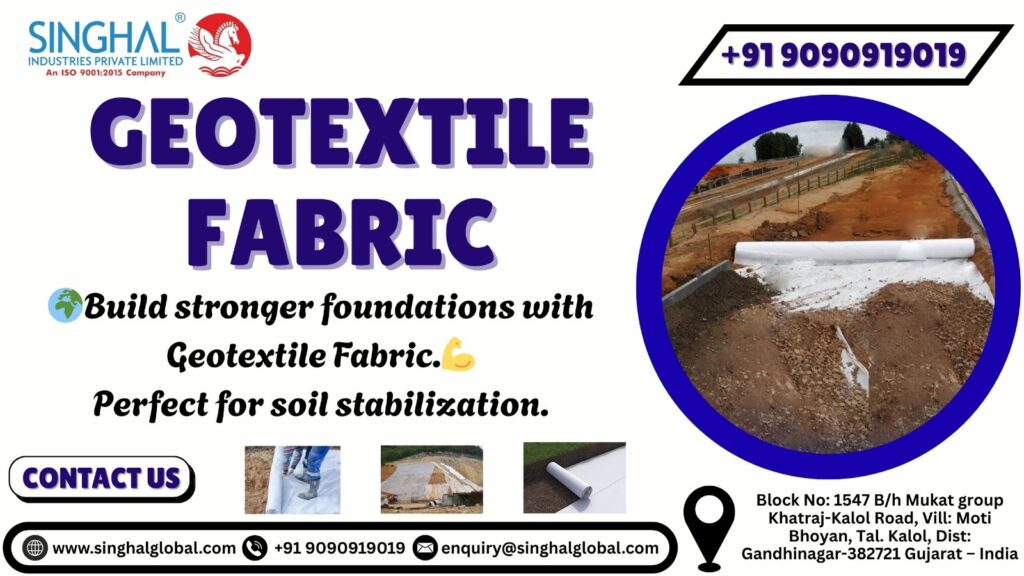
Geotextile fabric is revolutionizing the rules of civil engineering. It’s this permeable, tough fabric made of synthetic fibers that is buried in the soil to address many problems, including soil erosion or weak foundations. Consider it a clever layer which makes construction projects more durable, more affordable, longer-lasting, and less expensive.
Engineers once had to deal with soils that were unstable, which could shift or sink beneath roads and structures. Today, geotextile comes in and acts as an emulsifier, filter, or a reinforcement, depending on the task. Geotextile isn’t just a fad and real-world projects demonstrate that it reduces costs and improves performance.
What Makes Geotextiles So Special?
This fabric isn’t the typical cloth. It’s made from polyester or polypropylene, then punched or made into sheets that let water in but also hold soil in place. Non-woven kinds are fluffy for drainage, whereas those woven are tough to ensure toughness.
What’s behind the revolution? Traditional methods meant hauling in tons of gravel or digging deeper foundations-expensive and time-consuming. Geotextile reduces the amount of work needed by 20-30% and saves money immediately. It’s also environmentally friendly which reduces waste and erosion. I’ve seen areas where it transformed mushy soil into solid bases in the blink of an eye.
It’s also flexible. Rolls are available in widths of up to 6 meters. They are easy to remove from large areas. It is UV-resistant and resistant to chemicals, they last for many decades under the ground. So it is no surprise that civil engineers rely on the material for all kinds of projects from landfills to highways.
Key Functions in Civil Engineering
Geotextiles perform five major functions: separation, filtration, drainage, reinforcement, and protection. Separation is a way to keep soil layers separated and prevents them from mixing, such as clay and gravel turning into a mud soup. Filtration allows water flow, but it also traps tiny particles. Drainage channels water away, preventing water-logged failures. Reinforcement distributes loads equally, similar to trampolines under weights. Protection guards geomembranes against punctures. Every function makes sure to target weak points in the projects.
Imagine a typical road. In the absence of geotextile, subgrade soil gets buried into the base, leading to potholes in a short time. This means that the road is smoother for longer. Research shows that maintenance costs drop by half. Simple but brilliant.
Real-World Applications Across Projects
The Geotextile for road construction. It sits between aggregate and subgrade and improves the stability of the road. It is able to handle the large traffic volumes on soft soils, which is common in the monsoon regions of India. Railways also use it, underneath tracks to stop the vibrations and settle. To stop erosion, the slope is pinned or banks of rivers. Dams and embankments are reinforced to stop water pressure. Landfills cover it to prevent leachate drainage, ensuring that toxins are contained. The coastal defenses even wrap it around breakwaters.
In urban drainage, it filters storm water systems, preventing clogs. Airports put it beneath runways to provide consistent support. It is a versatile option for farms, tunnels, ponds; you know what you want to do. In the flood-prone zones of Varanasi, projects could benefit greatly to ensure solid foundations.
Types of Geotextile Fabrics Explained
Two types of rules exist between non-woven and woven. Woven looks like a net, with high tensile strength for reinforcement—perfect for roads. Non-woven is needle-punched felt, perfect for drainage and filtering. The weights range from 100 GSM (light filtering) up to 1,000 GSM (heavy duty). PP is inexpensive and widely used as it can handle high temperatures. Hybrids combine both to serve multiple purposes. The selection of the soil depends on its type and load. The soil that is sandy requires filtration; clay requires separation. Try it out with soil tests—don’t make a guess. Manufacturers modify their product to fit specific needs, such as UV protection in sun-soaked India.
Geotextile Fabric Price Breakdown
Geotextile fabric prices start at a low price, about $20 per square meter, for non-woven 120 GSM suitable for basic tasks. Heavier 300 GSM pipeline bags hit Rs300/sq.m. Woven PP types are priced between Rs30 and 45 per square. Geotextile fabric price in India are subject to the cost of raw materials and the location. Delhi suppliers offer non-woven for sale at Rs20-34/sq.m with 100-300 GSM. Gujarat and Tamil Nadu vendors match that, often cheaper when buying the bulk roll of 100m.
Installation: Step-by-Step Guide
- Flatten it, then overlap edges 300-500mm.
- Stake every one meter.
- Make sure there are no stone poking holes.
- For roads, lay over the subgrade and add 150mm of aggregate. Compact.
- On slopes, you can pin the slope using staples or nails.
- Drainage layers require trenches.
- Examine permeability following installation.
- Unintentional bunching causes failures, therefore training employees.
- It takes half a day to cover 1000 sq.m.
- Tools Only the shovel and roller.
Benefits That Save Time and Money
Reduces use of material to 25%. Increases the life of materials by 2x, and reduces maintenance. Eco-friendly: less quarrying and improved water flow. In India, it works with budget-friendly projects perfectly. It’s a simple calculation: A 1km road can save Rs5-10 lakh. The bearing capacity of soft soils ranges between 2 and 8 tons/sq.m. The lower maintenance level means fewer closures.
Challenges and How to Beat Them
Suffocation in fine soils? Utilize a greater GSM. UV exposure? Bury quick. What is the cost in the beginning? ROI within the first year. Purchase quality, cheap imports that tear easily.
Future of Geotextiles in Engineering
Smart geotextiles that have sensors monitor the humidity in real-time. Bio-based fibers are coming, more sustainable. With India’s massive infrastructure development—a Rs 111 lakh crore, the demand for infra-red is exploding. Geotextile gsm suppliers increase; China dominates, but India is increasing. Expect prices to fall below Rs20/sq.m within the next few days. Revolution? It’s just beginning.
Conclusion
In conclusion, geotextile isn’t just any fabric. It’s a civil engineering superpower. From the ghats of Varanasi to highways, it can help you build a better tomorrow. Get a Geotextile fabric price list from local suppliers and begin changing the way you do your next job.
Frequently Asked Questions (FAQs)
Q1. What are the principal applications of geotextile fabric in construction?
Separation in roads, filtration in drains, reinforcement in embankments, erosion control on slopes, drainage in landfills. It is a solution to soil problems all over the world.
Q2. How can geotextile fabric help improve soil stability?
It locks with soil particles, spreading loads, and stops mixing. It increases capacity and reduces settlements—similar to the addition of rebar to concrete.
Q3. What kind of geotextile fabric is available?
Woven (strength), non-woven (drainage), PP or polyester. The weight range is 100-1000 grams for jobs ranging from light filter to strong reinforcement.
Q4. What is the use of geotextile fabric for road building?
Laying over subgrade prior to base layer. Separates soil, removes water, strengthens. Saves gravel, lasts longer under traffic.
Q5. Who is the largest Manufacture of geotextile fabric?
China dominates global exports; however, India (firms similar to Singhal) is growing rapidly in Asia. The US and Europe are following for the top-end. Find the data on trade for 2026 updates.