When you look around the modern cityscape, the world is shifting faster than ever. From massive highways to smart homes to green skyscrapers, the construction industry is pursuing a new path: sustainability. One of the major players quietly creating a huge impact in the direction of a greener future is geotextile. While it’s not like wind turbines or solar panels, this basic but powerful material is rapidly becoming an essential element of sustainable construction practices across the globe. Let’s explore the ways that geotextile fabric is influencing the future of sustainable construction and why it’s getting global attention—from pricing trends to its intriguing function in drainage, Geotextile fabric for waterproofing, and stabilizing soil.
Understanding Geotextile Fabric
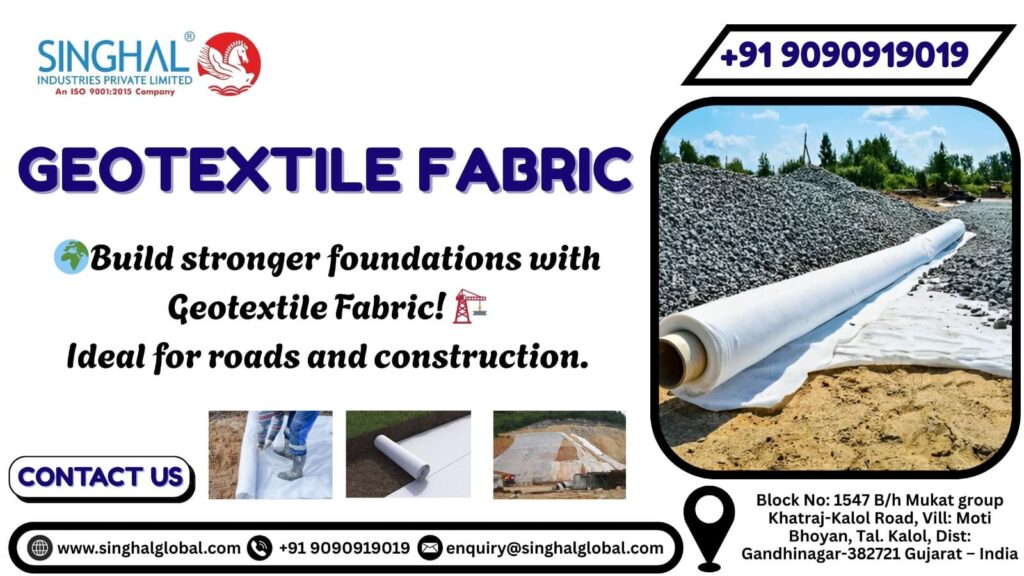
In essence, geotextile fabric can be described as a permeable substance made of synthetic fibers such as polypropylene or polyester. It has multiple uses in the construction industry, such as drainage, separation, filtration, as well as protection and even reinforcement. However, what makes it unique is the fact that it improves soil’s performance while decreasing the need for harmful construction techniques.
Imagine that traditional construction usually required massive-scale foundations, soil repair, as well as chemical buffering chemicals that are all harmful to environmental quality. Geotextile fabric, on the other hand, allows engineers to achieve similar or better results through the use of lightweight, recyclable, and other eco-friendly solutions.
The Green Revolution in Construction
The most talked-about topic in engineering and architecture these days has become “green building.” Everyone’s discussing reducing carbon footprint, preserving water, and encouraging the use of sustainable materials. Geotextile fabric is now a largely unnoticed hero. It is being used for roads, wall retaining systems, landfills, drainage systems, as well as green roofing. Due to its capacity to cleanse and safeguard the environmental environment, it’s helping to create stronger and more environmentally sustainable infrastructure.
I have been to a place within Dhaka, Bangladesh, where engineers were building an entirely new highway. The project team described the way that using geotextile fabric to waterproof it allowed them to reduce erosion and extend the life of the roadway. The climate is unpredictable and humid, and ensuring the strength of foundations for roads is a challenge. But, by merely placing geotextile fabric on top of subgrade and soil layers, they slowed the erosion of water by the structure. It not only saved costs but also reduced maintenance requirements, which is a positive for economics and sustainability.
Geotextile Fabric: Waterproofing and Durability
For Geotextile fabric for waterproofing is among the most important aspects of building. There is nothing worse than cracks, leaks, or seepages. Geotextile fabric that is waterproof is a great choice because it creates an extra layer of protection between the waterproof membrane, concrete, or soil. One crucial component is a geotextile fabric. It protects roots from causing damage to the waterproof layer below and allows the water to drain efficiently. Without it, the elegant rooftop garden may become an unintentional leak.
Affordability and Market Trends
When people are informed about sustainable materials, they typically think that they’re expensive. However, the good news is that the Geotextile fabric price is quite affordable when compared with the long-term benefits. Due to the mass production of geotextile fabrics and technological advancements, the prices are becoming more affordable every year.
In reality, if you take a look at the Geotextile fabric price in Bangladesh, you’ll see an increase in the past decade as local production grows. In urban areas like Chittagong and Dhaka, the construction companies are purchasing these fabrics at a relatively low price due to the superior supply chains and the local demand. Not only is this economical but also sustainable even to the poorest countries.
Prices may differ depending on such factors as:
- GSM (grams per square meter)
- Fabric type (Non woven geotextile fabric or woven)
- Thickness and width
- The length of the roll
- Material composition
An example is the fact that the more toughness and durability a GSM fabric has, the higher it will be, but it is also an extra expense. But when you take into account the longer lifespan of embankments, roads, or drainage systems that use these types of fabrics, the return on investment is evident.
The Future: Innovations and Sustainability
In the future, the possibilities of geotextile fabrics are limitless. Biodegradable geotextiles of natural fabrics (jute or coconut coir) are under development by researchers, which dissolve when they no longer serve a purpose. This is enormous to be used in the construction site temporary projects to check erosion. Suppose that the riverbanks are reinforced with materials that can revert to a soil state naturally. Pollution, waste, nothing, just intelligent engineering.
Some of the future projects are looking into the smart geotextiles, which have sensors that detect and monitor the temperature, soil moisture, or stress levels in real-time. These technologies could warn engineers of potential landslides or foundation problems before they occur. This sounds like science fiction, but it’s actually in research and development.
The combination of technology, sustainability, and cost makes geotextile textiles an unbeatable choice in the world of sustainable construction.
Challenges and Contradictions
Nevertheless, it is not so ideal all of the time. There is the problem of recycling synthetic geotextiles after their usage especially in massive projects such as dams, highways or roads. They take time to dispose of, but it is not easy to dispose of them in a sustainable way. Many claim that until we have closed-loop recycling, the term “sustainable” is only partially real.
However, considering the enormous environmental damage that conventional methods cause, such as the use of concrete blocks or membranes that aren’t recyclable, the balance is still significantly in favor of geotextiles. This isn’t about perfectionism, but rather, it’s about making progress. There are some contradictions and misunderstandings, but that’s the way to innovate—by continuously changing and challenging the conventional methods.
Conclusion
In a fast-moving world towards sustainability, products like geotextile fabrics offer an opportunity and practicality all in one. It’s not about just cost-effectiveness or ease of use, but rather rethinking the way we design our environment. If it’s stabilizing an undeveloped road in Bangladesh, waterproofing the underground metro system in Mumbai, or constructing the green roof of New York, geotextiles are making the invisible foundation of the future’s sustainable infrastructure.
For someone who’s observed both traditional and contemporary construction techniques up close, I am able to say with confidence that the future is bright. It smells fresh after a rain. It is able to hold its shape because of an under-layer of geotextile that holds all the elements in their place.
Frequently Asked Questions (FAQs)
Q1. What’s GSM used for?
GSM is grams per square meter which is a measure of the density and weight of the fabric. The higher GSM means a heavier and more durable material, which is normally used in heavy duties like the construction of the road. The less heavy GSM materials are cheaper and these materials are suitable in light drainage or landscaping.
Q2. Are geotextile fabrics useful in drainage systems?
Absolutely. Geotextile fabric is mostly used in drainage systems because it can be used to permit water to pass through it, eliminating soil particles. This prevents clogging and ensures a free flow of water is achieved and is therefore applicable to underground drains and also septic systems plus also to backfills of water retaining walls.
Q3. What is the lifespan of geotextile fabric in the ground?
Depending on the soil conditions and the nature of the fabric, the fabric is durable up to 20 to 50 years. Premium chemical and UV-resistance fabrics would be more durable. The trick lies in making sure that it is applied and safeguarded against direct sun.
Q4. What roll sizes are there with geotextile fabrics?
The rolls usually come in 1-6 meters for width, 50 meters up to 200 meters in length of the roll. Nevertheless, larger scale projects can be custom sizes made.
Q5. Who is the largest manufacture of Geotextile Fabric?
The reputable suppliers worldwide. The leading suppliers include companies such as Singhal indutries Pvt Ltd, Fibertex, Garware Technical Fibres, and local manufacturers in Bangladesh and India; they are the suppliers of a variety of quality and GSM products that can be used in your particular project according to your requirements.